
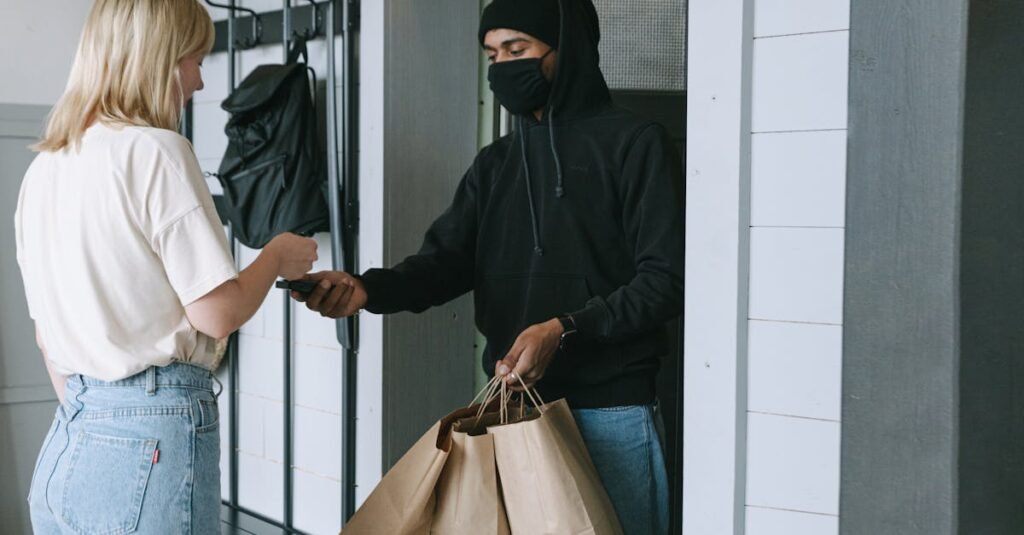
Last-mile delivery is the step that leads directly to the customer. It is the final and most crucial step in the delivery process, when the product is transported from a local hub, warehouse, or store to the customer’s doorstep. For small businesses, this step has a significant effect on customer satisfaction, delivery speed, and profitability. With the growth of online ordering, it is of utmost importance to understand the mechanics of last-mile delivery and how to keep its costs low to survive in the market.
What Is Last-Mile Delivery and Why Does It Matter?
Last-mile delivery is the last stage in the supply chain network. It tends to be the most complex and costly element of the delivery process despite the fact that it physically traverses the shortest distance. Traffic jams, unsuccessful delivery attempts, fuel prices and customers’ high service, speed demands are among the factors that lead to higher costs.
Small businesses with inefficient last-mile operations stand a risk of narrowing their profit margins and damaging their image. On the other hand, a well-optimised system can turn into a formidable competitive edge.
Key Challenges Small Businesses Face in Last-Mile Delivery
Small companies have a hard time figuring out how to deliver goods at a low cost, have a small number of delivery people available, and can’t predict how much demand will be. They are not like big platforms that always have a lot of trucks or a very advanced logistics system. On one hand, the price of fuel goes up, so the cost of delivery increases; on the other hand, customers want their packages the same day or the day after, so the pressure increases.
Cost-Saving Strategies for Small Businesses
Reducing last-mile delivery costs does not require a massive investment. With smart planning and strategic decisions, small businesses can significantly improve efficiency while maintaining service quality. Some ways of delivery that can be environmentally friendly are:
- Optimising routes for delivery to lessen travel durations and petrol consumption, collaborating with local delivery services instead of having a fully operational in-house fleet, providing customers with flexible delivery slots, implementing real-time tracking to reduce failed delivery attempts, grouping multiple orders from the same area, and motivating customers to choose either pickup or a scheduled delivery.
By implementing these measures, businesses can reduce unnecessary expenses and improve delivery reliability without compromising customer experience.
The Role of Technology in Reducing Last-Mile Costs
Technology is very important for the last-mile delivery of today. Using delivery management software, the assignments of orders can be done automatically, routes can be optimised, and the tracking of performance metrics can be done. Small businesses, for instance, can greatly benefit from even the most basic tools, such as GPS, enabled apps and order tracking systems. These solutions assist in pinpointing inefficiencies, minimising manual errors, and delivering useful insights into delivery performance. As data-driven decisions become more refined, they can result in regular cost savings and improved planning.
Local Partnerships and Micro-Fulfilment Models
One advantage small businesses have when it comes to cutting last-mile delivery costs is concentrating on their local area. Working together with stores or warehouses in the vicinity or delivery riders who live nearby results in less travel for the delivery and thus shorter delivery time.
Micro fulfilment centres, where inventory is kept closer to the customer, are getting trendy as of now because they enable making deliveries more quickly and at lower prices. This localised way of doing things not only saves money but also helps to provide faster service and gain higher customer satisfaction.
How Last-Mile Delivery Improves Customer Experience
Efficient last-mile delivery is more than just cost savings; it is a factor that shapes customers’ perceptions of a brand. Delivering on time, providing correct tracking information, and maintaining good communication help to gain customers’ confidence, thus leading to recurring purchases.
Conclusion
Last-mile delivery is a convoluted, yet still controllable, problem for small enterprises. If they comprehend the mechanism thoroughly and adopt ingenious methods to save money, companies can make delivery a source of growth instead of an expense. When equipped with suitable technological tools, relationships with local partners, and an efficient operating system, small companies will be able to compete competently, supply more quickly, and gain customer loyalty over the years, while disposing of cost issues.